How to learn Hindi as an adult: script, speaking, grammar, and a realistic roadmap.
Hindi is easier to start when you learn it as a living language: hear the sounds, speak complete phrases, build Devanagari gradually, and connect each lesson to family, travel, films, culture, or everyday conversation.

Hindi learning works best when script and speech grow together
Hindi is written in Devanagari and spoken by hundreds of millions of people across India and the diaspora. For adult learners, the fastest early progress usually comes from a blended path: speak from the first lesson, learn the sound system carefully, and use the script to make pronunciation clearer.
Learn useful sentences first
Memorized word lists do not create conversation. Start with greetings, introductions, family words, likes and dislikes, requests, directions, and short answers you can use immediately.
Treat pronunciation as a skill
Hindi has sounds English speakers may not separate clearly at first, including dental and retroflex consonants. Correcting those early makes listening and speaking much easier.
Use Devanagari as a map
Roman spelling can hide important sound differences. Devanagari gives one consistent visual system for vowels, consonants, matras, and conjuncts.
Start reading Hindi with a small alphabet grid
Devanagari is written left to right. Many letters hang from a headline, and vowel marks attach to consonants to change the sound. The full script is larger than this grid, but these core letters give beginners a practical first map.
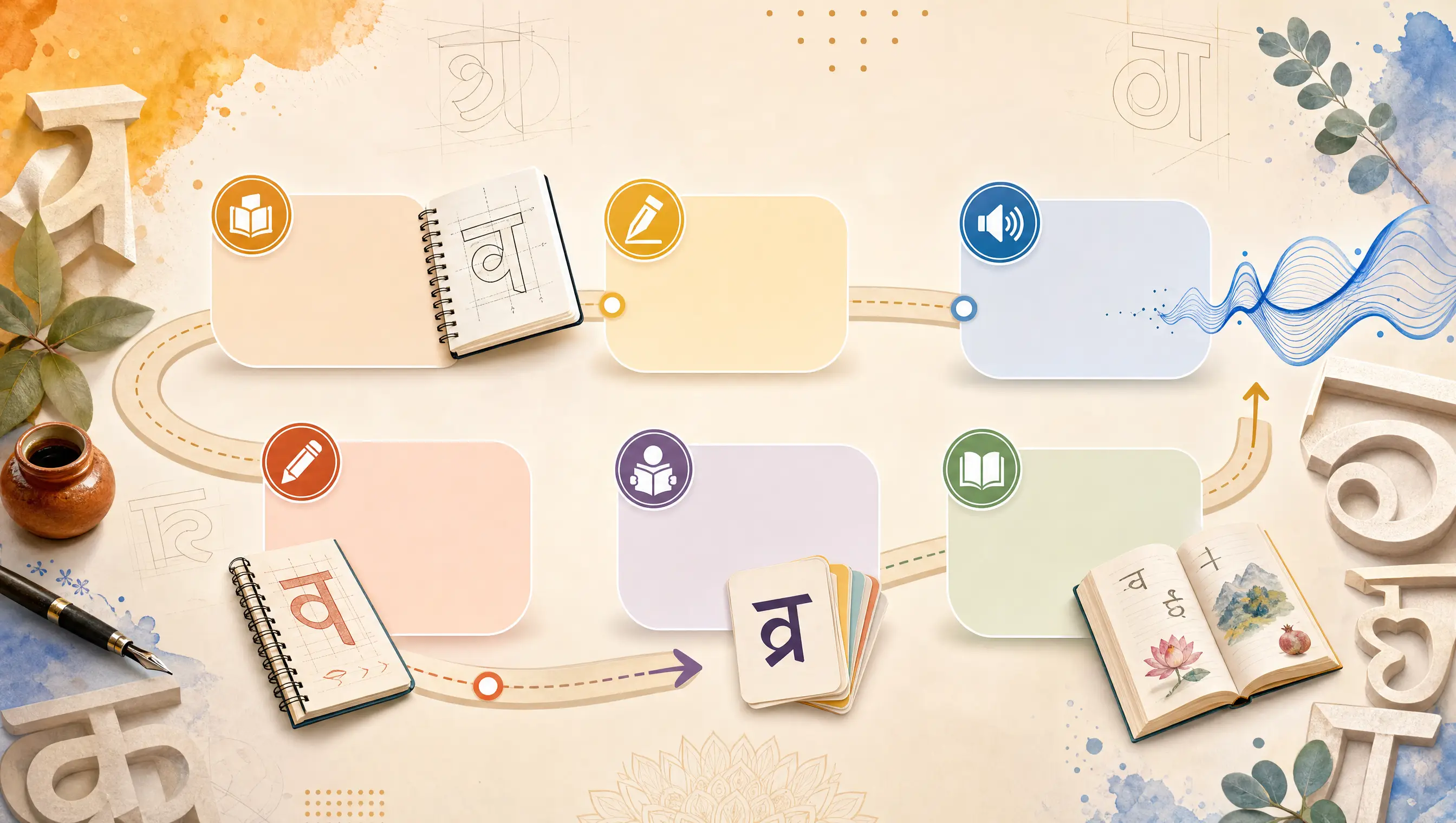
A realistic roadmap for learning Hindi online
The exact pace depends on your background, practice time, and goals. This roadmap is designed for adult beginners taking live lessons and doing short practice between classes.
Weeks 1-2
Master greetings, names, yes/no answers, basic pronunciation, and the first Devanagari vowels and consonants.
Weeks 3-4
Build simple sentences with pronouns, family words, numbers, common verbs, and polite requests.
Months 2-3
Practice present, past, and future patterns; read short words; understand slow everyday speech; hold guided conversations.
Months 4-6
Expand listening, speak in connected paragraphs, handle travel and family topics, and start reading short passages.
The weekly routine that turns lessons into progress
Hindi improves through repeated retrieval, not long occasional study sessions. A strong week has live correction, independent recall, and listening exposure.
Speak in every class
Use complete sentences even when they are simple. Fluency grows when the mouth practices grammar, not only the mind.
Review aloud for 10 minutes
Short daily speaking review is better than one long cram session before class.
Read five new words
Use Devanagari to connect sound and spelling. Start with names, family terms, foods, and common verbs.
Listen with a purpose
Pick one short clip, song line, or dialogue and listen for known words before trying to understand everything.
What slows Hindi learners down
Trusted Hindi learning and language references
Use resources for context, standards, and script reference. Use lessons for feedback, speaking pressure, and a plan that fits your real goal.
Authoritative references
Where Minu's lessons fit
Self-study resources explain the language, but live classes help you pronounce, respond, and stay consistent. Start with the online Hindi classes landing page, compare methods in best way to learn Hindi, review the Hindi curriculum, or focus on spoken Hindi classes.
Continue learning with related Hindi pages
Hindi learning FAQ
What is the best way to learn Hindi online?
Should I learn Devanagari before speaking Hindi?
How long does it take to learn Hindi?
Can adults become conversational in Hindi?
Book a free online Hindi trial class
Send your goal, package interest, and US time zone. Minu will reply personally by email, with WhatsApp as a fallback.